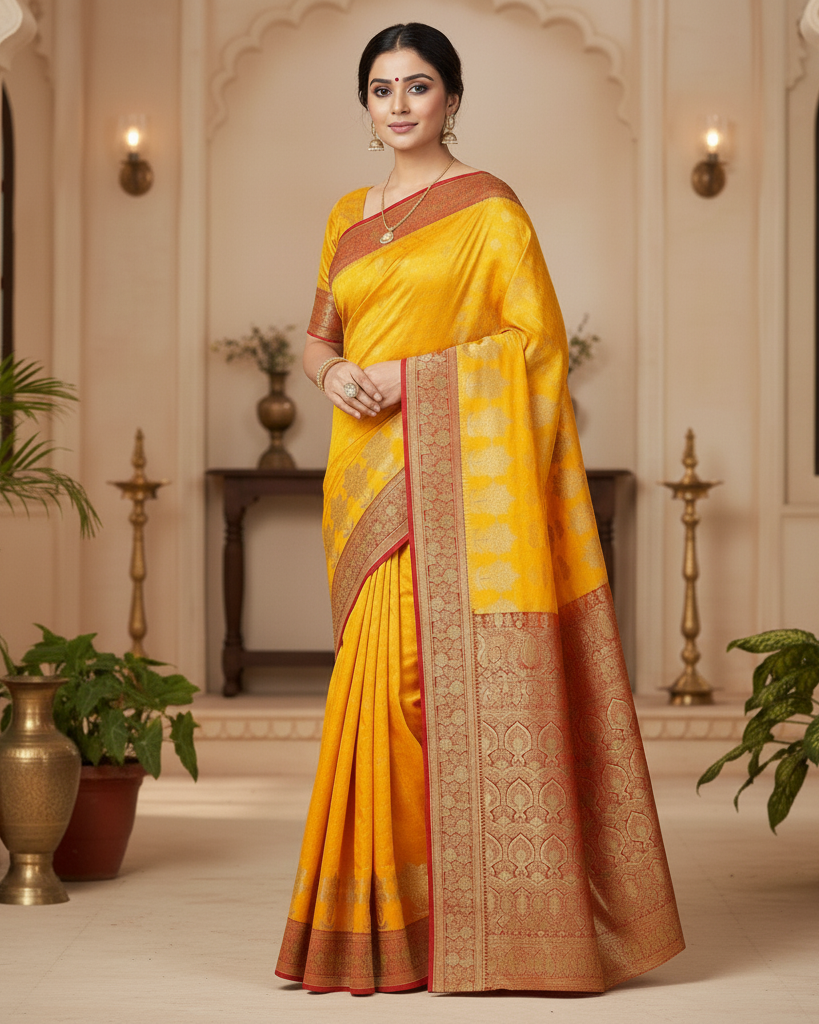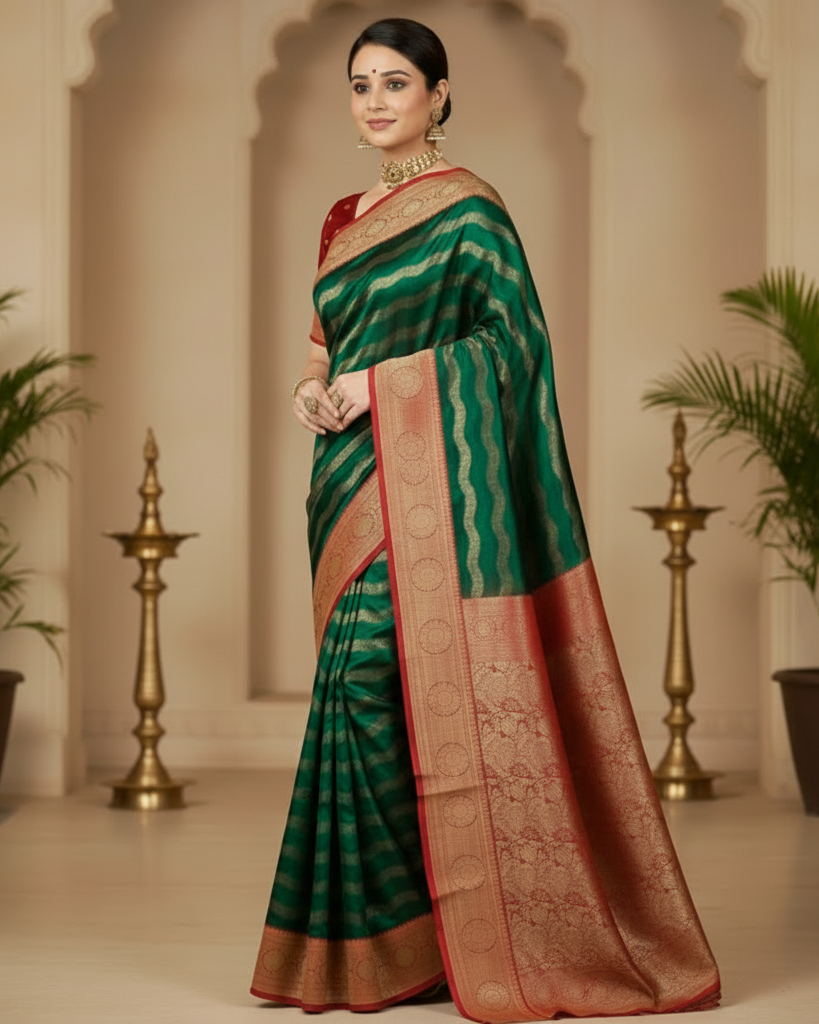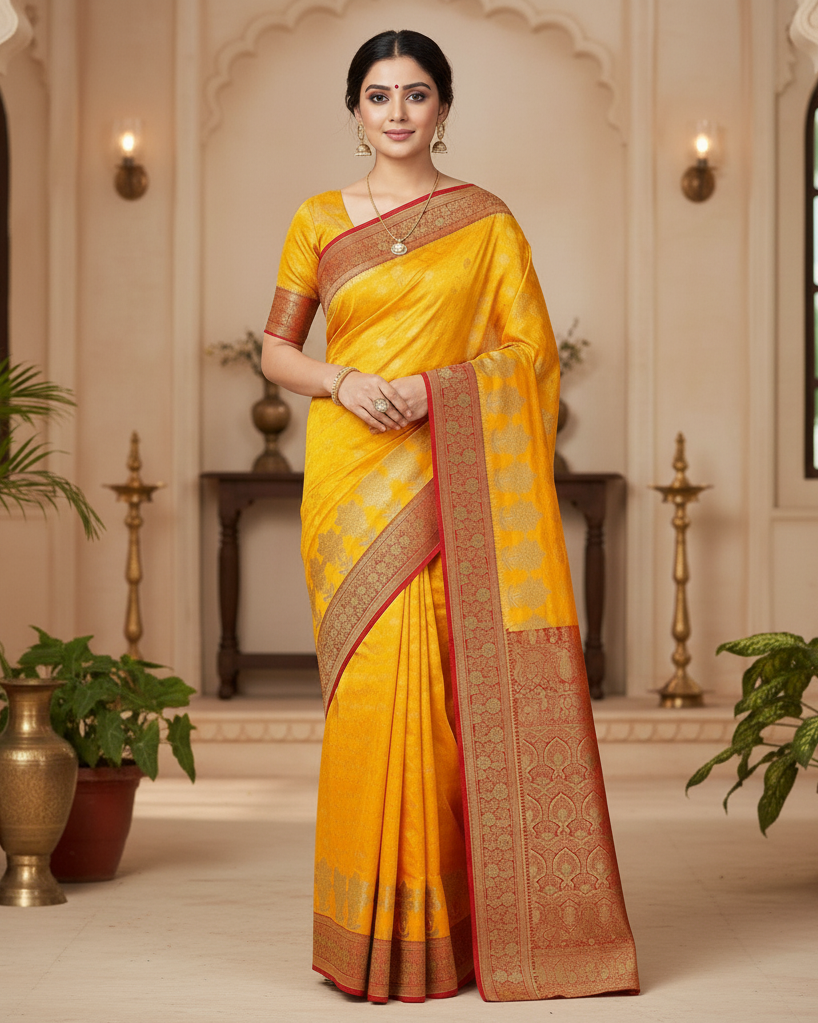
Jamdani weaving represents one of the most sophisticated and artistic textile traditions of India. Recognized by UNESCO as an Intangible Cultural Heritage of Humanity, this ancient craft produces fabrics so delicate and intricate that the patterns appear as if they are embroidered on sheer, almost ethereal cloth.
What is Jamdani?
Jamdani is a type of fine muslin fabric traditionally woven in and around Dhaka, Bangladesh, and parts of West Bengal, India. The word "Jamdani" is derived from the Persian words "jama" (cloth) and "dana" (but weft), referring to the supplementary weft technique used to create patterns. Unlike regular weaving where the weft runs across the entire width, in Jamdani, additional weft threads are inserted manually to create geometric or floral motifs that stand out against the sheer background.
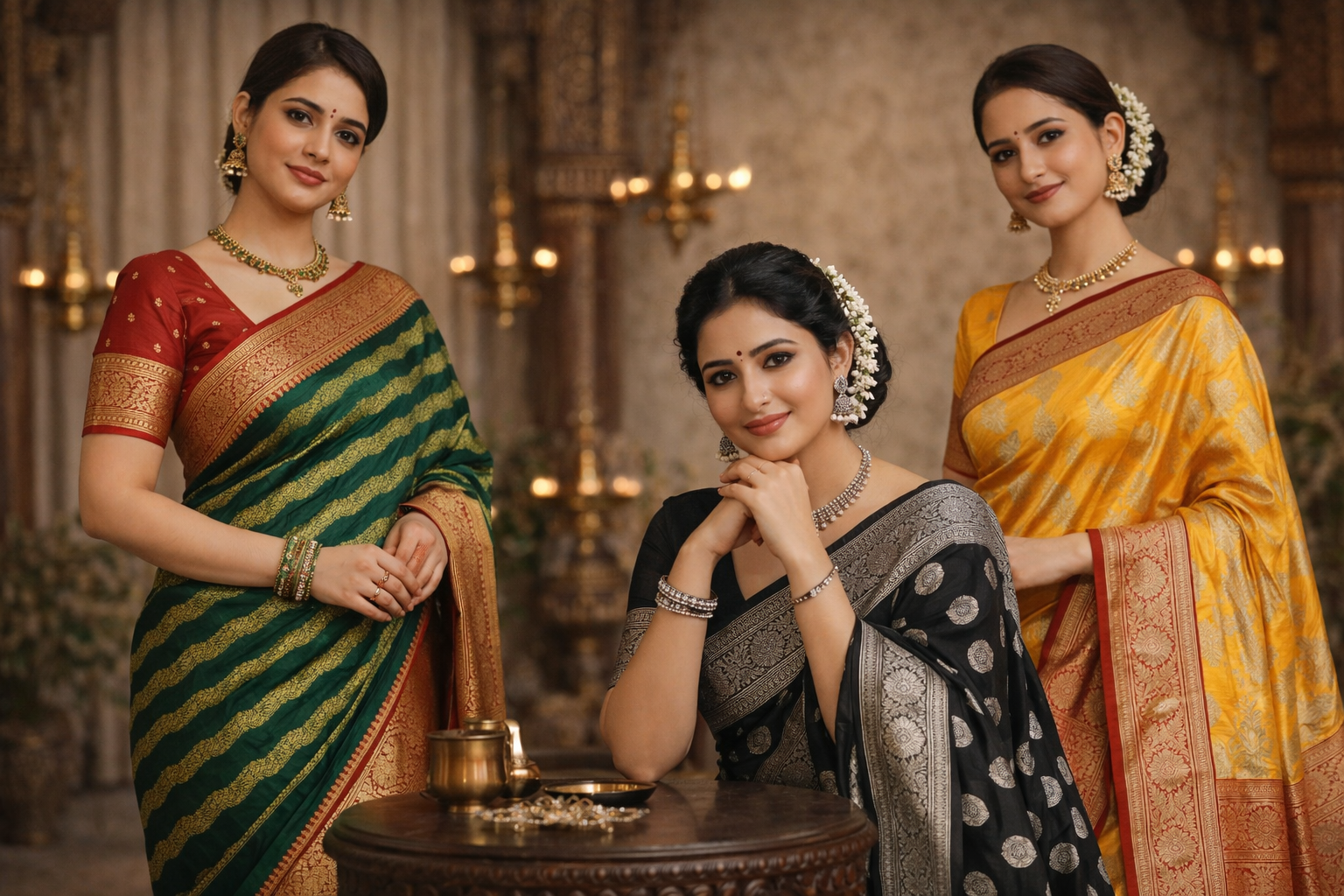
The Weaving Process
What makes Jamdani extraordinary is the painstaking manual process involved. The weaving is done on a traditional pit loom, and the weaver works with remarkable precision:
- Yarn Preparation: Extrem fine cotton yarn is used, often spun by hand to achieve the desired delicacy. The yarn is treated with rice starch to give it strength during weaving.
- Loom Setup: The weaver sets up the loom with the base warp threads. The design is not drawn on paper but exists in the weaver's memory, passed down through generations.
- Supplementary Weft: As the weaving progresses, the weaver manually adds extra weft threads to create the pattern. This is done by inserting small bamboo needles between the warp threads, a process that requires immense skill and concentration.
- Pattern Creation: The motifs - which can include flowers, leaves, geometric shapes, and even complex scenes - emerge as the weaving continues. Each design element is created by manipulating the weft threads individually.
Characteristics of Authentic Jamdani
True Jamdani can be identified by several distinctive features:
- Sheer Base: The fabric has an almost transparent, lightweight base that feels like second skin.
- Raised Patterns: The designs appear slightly raised from the surface, creating a subtle texture.
- No Wrong Side: Jamdani is reversible - the pattern looks almost identical on both sides, a testament to the weaver's skill.
- Breathability: Despite its intricate patterns, the fabric remains highly breathable and comfortable.
- Light Weight: A full Jamdani saree can weigh as little as 300-400 grams, making it incredibly light.
"Jamdani is not just weaving; it's like painting with threads. The weaver creates each motif by hand, making every piece unique and irreplaceable."
Regional Variations
Over centuries, Jamdani weaving has developed distinct regional styles:
1. Dhakai Jamdani (Bangladesh)
Considered the finest and most authentic, Dhakai Jamdani uses the highest quality cotton and features extremely fine, dense patterns. The motifs are often inspired by nature - flowers, birds, and leaves - and can include up to 100 different designs in a single saree.
2. Bengal Jamdani (West Bengal, India)
Indian Jamdani, particularly from areas like Fulia and Santipur, maintains the traditional techniques while sometimes incorporating local motifs and slightly different color palettes. The weaving remains equally intricate but may use slightly thicker yarn.
3. Tangail Jamdani (Bangladesh)
This variation features bold, larger motifs and often incorporates vibrant colors. The patterns are more geometric and less dense than Dhakai Jamdani.
The Cultural Significance
Jamdani has deep cultural roots in the Bengal region. Historically, it was patronized by Mughal emperors and later by the Nawabs of Bengal. The craft became so important that entire communities specialized in different aspects of production - spinning, dyeing, weaving, and finishing.
For weavers, Jamdani is not merely a profession but a way of life. The knowledge is passed down through generations, with children learning to handle threads and needles from a young age. The craft has survived colonial exploitation, mechanization threats, and political upheavals, continuing to thrive due to the dedication of these artisan families.
Challenges and Preservation
Despite its UNESCO recognition, Jamdani weaving faces several challenges:
- Labor-Intensive Process: A single Jamdani saree can take 2-6 months to complete, making it expensive and time-consuming.
- Competition from Power Looms: Machine-made imitations flood the market at much lower prices, though they lack the authenticity and quality of handwoven pieces.
- Aging Artisan Population: Younger generations are increasingly moving to other professions due to low returns and the physical demands of the craft.
- Raw Material Costs: The fine cotton required for authentic Jamdani is becoming more expensive and harder to source.
How to Identify Authentic Jamdani
With many machine-made imitations in the market, here's how to ensure you're buying genuine Jamdani:
- Price: Authentic handwoven Jamdani is expensive. If the price seems too good to be true, it probably is. Prices typically start from ₹15,000 and can go much higher depending on complexity.
- Texture: Feel the fabric - it should be incredibly soft, lightweight, and breathable. Machine-made versions often feel stiff or coarse.
- Pattern Consistency: Look closely at the patterns. Handwoven Jamdani will have slight variations and imperfections that add to its charm. Machine-made copies are often too perfect and uniform.
- Back Side: Turn the fabric over. Authentic Jamdani looks almost as beautiful on the reverse side, while machine imitations have messy, tangled threads on the back.
- Certification: Reputable sellers provide authenticity certificates and information about the weaver or weaving cluster.
Caring for Jamdani
Given the delicate nature of Jamdani fabrics, proper care is essential:
- Always hand wash in mild detergent or opt for professional dry cleaning
- Never wring or twist the fabric; gently squeeze out excess water
- Dry in shade, laid flat, to maintain the shape
- Store in acid-free tissue paper, avoiding direct sunlight and moisture
- Refold periodically to prevent permanent creases
Why Jamdani Matters
Owning a Jamdani saree is not just about fashion - it's about preserving a living tradition. Each piece represents hundreds of hours of skilled labor, generations of accumulated knowledge, and a cultural legacy that has survived for centuries. When you purchase authentic Jamdani, you're supporting artisan families and helping ensure that this extraordinary craft continues to thrive.
At Vestie Fashion, we work directly with master weavers in the Bengal region to bring you authentic Jamdani sarees. Each piece in our collection is handwoven, ethically sourced, and comes with documentation of its origin. We believe in fair compensation for our weavers and transparency in our sourcing, ensuring that when you wear a Jamdani saree, you're not just wearing a beautiful garment - you're becoming part of a centuries-old story.