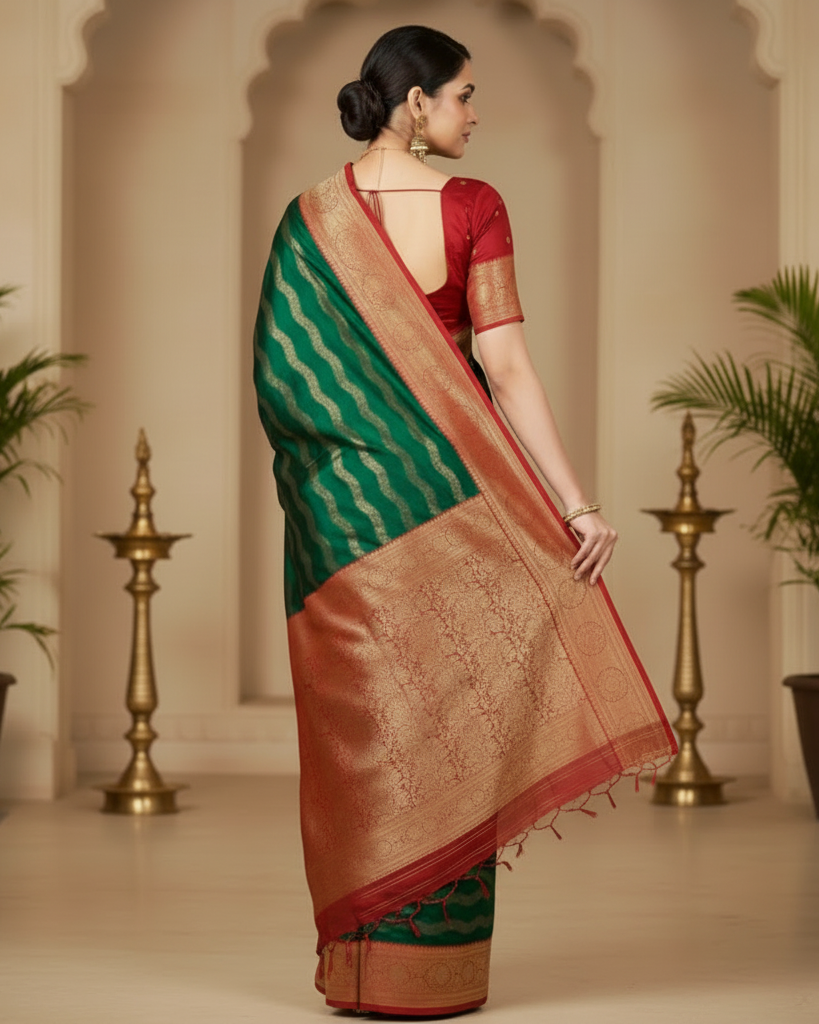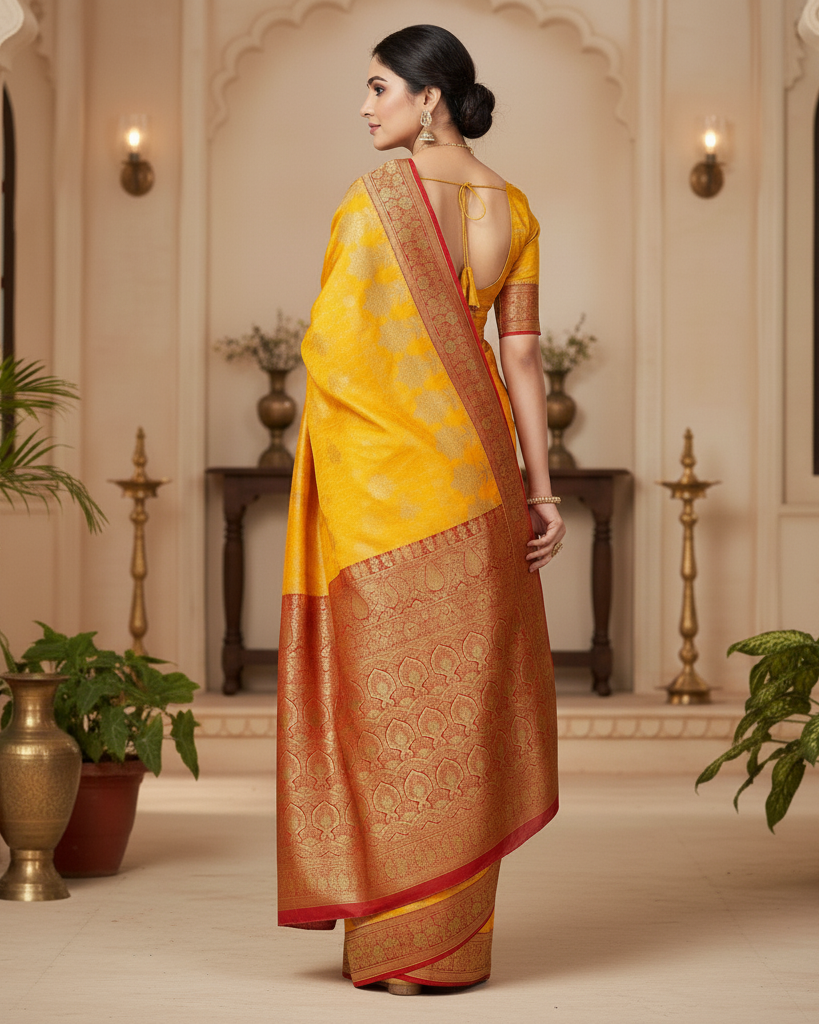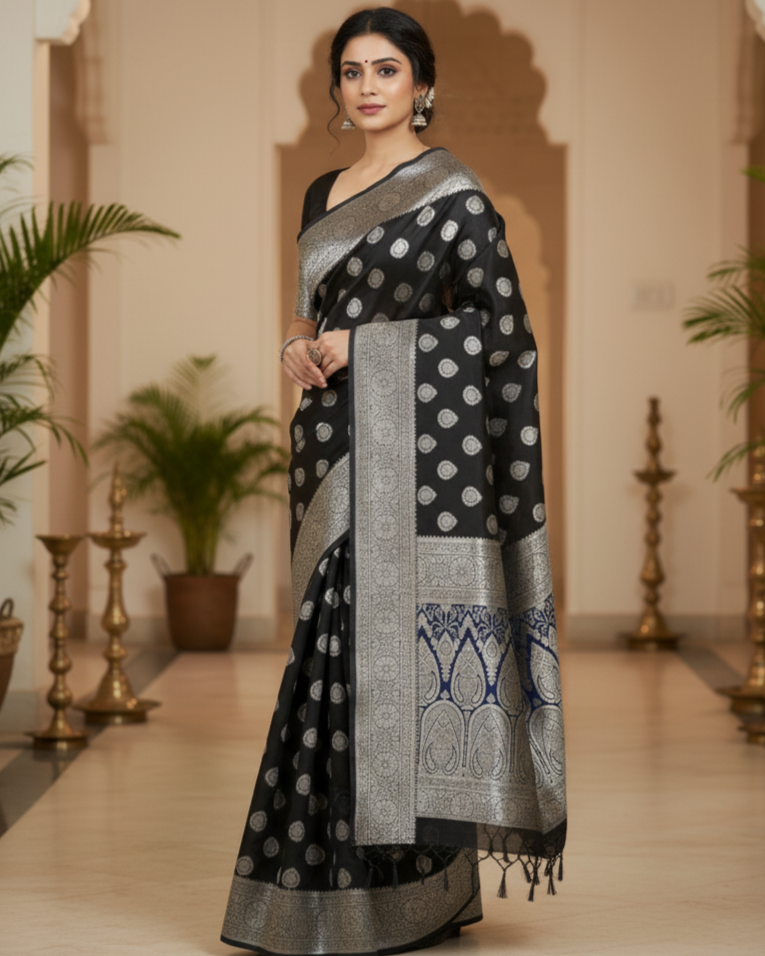
The saree is one of the most versatile garments in the world. With over 6 yards of fabric, there are countless ways to drape it, each style reflecting the culture, climate, and traditions of different regions across India. Here, we explore five classic draping styles that every saree lover should know.
1. The Nivi Style (Andhra Pradesh)
The most popular and widely worn style today, the Nivi drape originated in Andhra Pradesh. It's elegant, comfortable, and works with almost any saree type.
- Tuck the plain end of the saree into your petticoat at the waist, starting from the right side and moving left
- Complete one full round, tucking the fabric securely
- Make 5-7 even pleats (about 4-5 inches wide) and tuck them at the center of your waist, facing left
- Drape the remaining fabric (pallu) over your left shoulder
- Secure the pallu with a pin if needed
Best for: Daily wear, office, formal occasions
2. The Bengali Style (West Bengal)
The traditional Bengali drape is distinctive for its lack of pleats and the way the pallu is brought from the back to the front over the left shoulder.
- Tuck the saree into the petticoat and complete one full round
- Instead of making pleats, simply tuck the remaining fabric at the front
- Bring the pallu from the back, over the left shoulder, and let it fall in front
- The pallu is often worn without pleats, creating a flowing, graceful look
Best for: Jamdani, Tant, and Baluchari sarees
3. The Gujarati/Rajasthani Style
This style is known for its unique pallu placement - brought from the back over the right shoulder and draped across the front.
- Tuck the saree into the petticoat and make pleats at the front (similar to Nivi)
- Instead of draping the pallu over the left shoulder, bring it from the back over the right shoulder
- Let the pallu fall across the front of your body
- The pallu can be pinned to the right shoulder for security
Best for: Bandhani, Patola, and heavy embroidered sarees
4. The Maharashtrian Style (Nauvari)
The Nauvari (meaning "nine yards") is a unique drape that resembles a dhoti, allowing freedom of movement. Traditionally worn without a petticoat.
- Use a 9-yard saree instead of the standard 6 yards
- Tuck the center of the saree at the back waist
- Bring both ends between the legs and tuck at the front waist (like a dhoti)
- Drape the remaining fabric over the upper body like a shawl or across the chest
- Secure with pins as needed
Best for: Paithani sarees, traditional ceremonies
5. The Kodagu Style (Karnataka)
Also known as the Coorgi style, this drape is unique for its front pallu placement and pleat arrangement.
- Tuck the saree into the petticoat and complete one round
- Make pleats at the back instead of the front
- Bring the pallu over the right shoulder from the back
- Drape the pallu across the front and tuck it at the left waist
- The pleats at the back create a distinctive fan-like appearance
Best for: Mysore silk, Ilkal, and Kasavu sarees
"The way you drape a saree is like your signature - it reflects your personality, your region, and your mood. There's no wrong way to wear a saree."
Tips for Perfect Draping
- Right Petticoat: Ensure your petticoat fits well and matches your saree color
- Even Pleats: Take time to make uniform pleats - practice makes perfect
- Secure Tucking: Tuck firmly but not too tight for comfort
- Use Pins: Safety pins at key points (shoulder, waist) prevent slipping
- Right Blouse: A well-fitted blouse makes all the difference
- Practice: Don't get discouraged - draping takes practice
Choosing the Right Style for Your Saree
Different saree types look best in different draping styles:
- Banarasi Silk: Nivi style showcases the heavy pallu beautifully
- Jamdani: Bengali style honors its origins
- Patola: Gujarati style highlights the intricate patterns
- Kanjeevaram: Nivi or Kodagu style works well
- Bandhani: Gujarati style complements the tie-dye patterns
Modern Variations
Contemporary fashion has given rise to new draping styles:
- Pant Style: Drape the saree like wide-leg pants for a modern look
- Dhoti Style: Create a dhoti-inspired drape for fusion wear
- Cape Style: Use the pallu as a cape over a pre-draped saree
- Belted Style: Add a waist belt over the Nivi drape for a contemporary twist
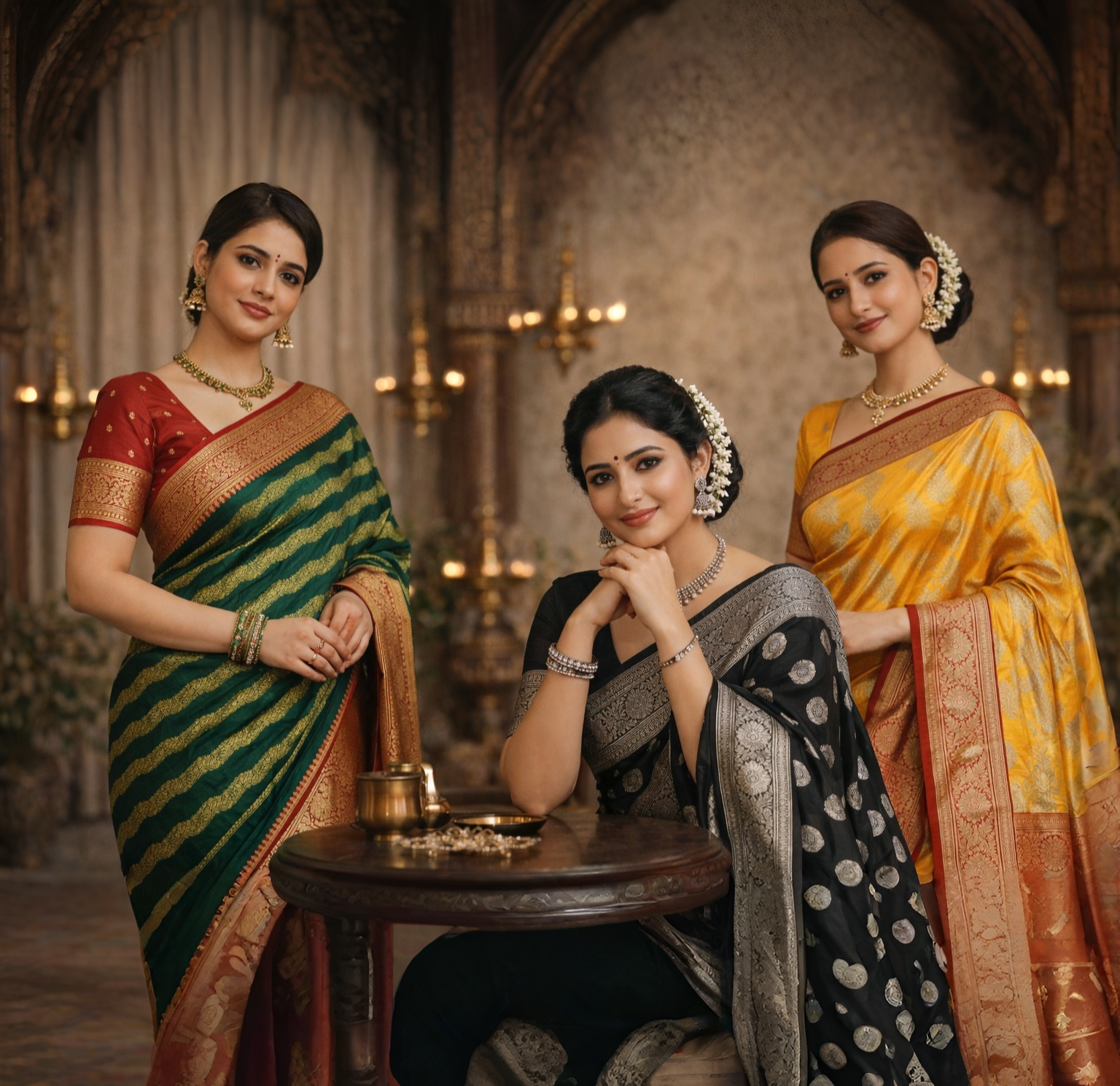
At Vestie Fashion, we believe that every woman should feel confident and beautiful in her saree. Whether you prefer traditional drapes or modern variations, the key is to wear it with pride. Our collection of premium silk sarees is designed to look stunning in any drape style you choose.