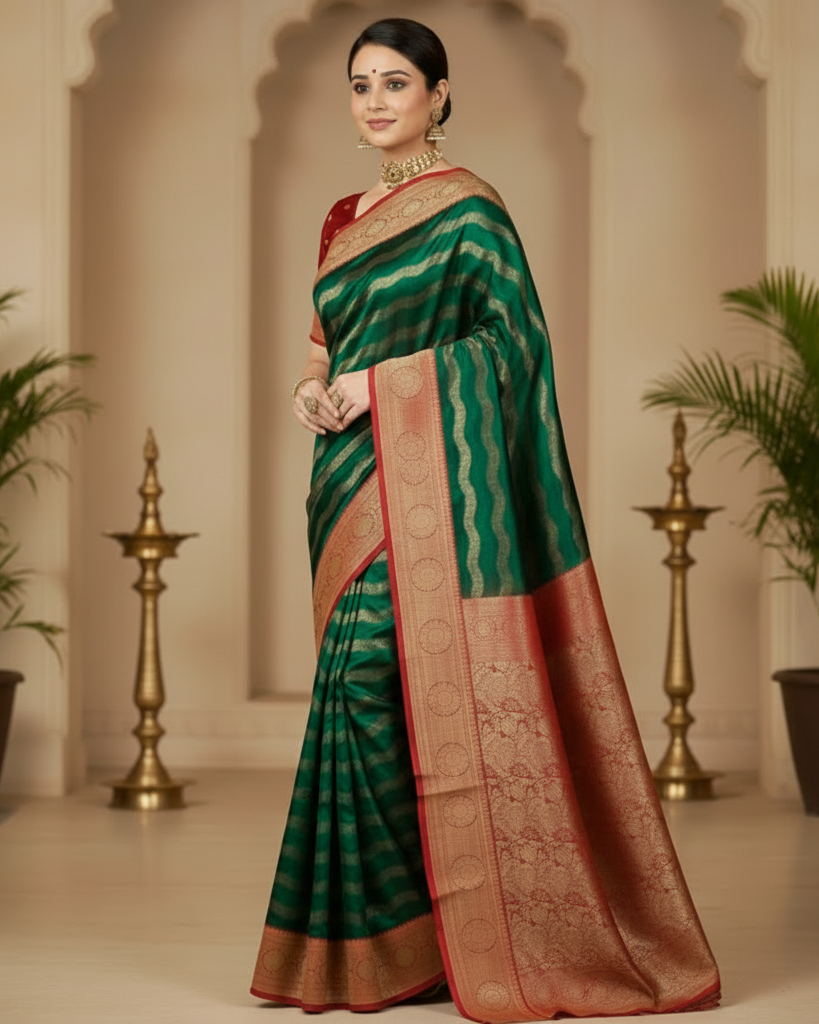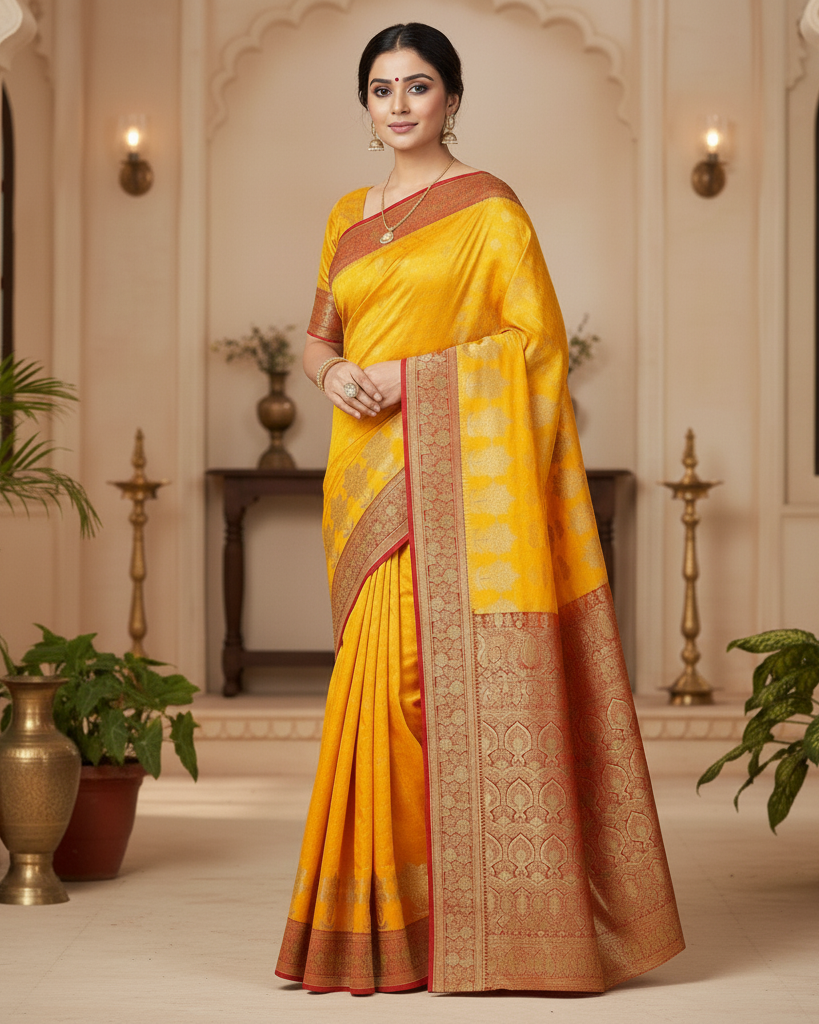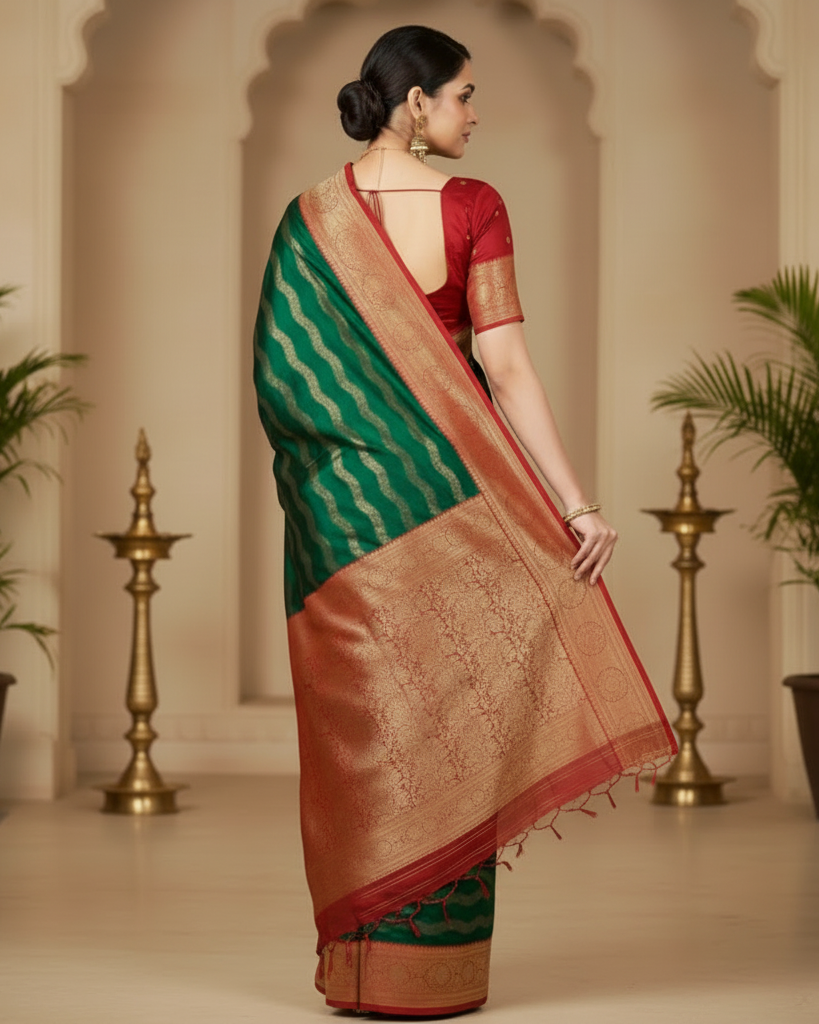
Behind every exquisite handwoven saree lies the story of a master weaver - someone who has dedicated their life to an ancient craft, spending countless hours at the loom to create textiles of extraordinary beauty. Today, we take you inside the world of these remarkable artisans and share what a typical day looks like for a master weaver in India.
Meeting Ramesh: A Third-Generation Weaver
Ramesh Kumar lives in a small village in Varanasi, where the rhythmic clacking of handlooms fills the air from dawn to dusk. His grandfather learned weaving from his father, his father from his grandfather, and now Ramesh continues this unbroken chain of craftsmanship that spans over a century.
"I started learning when I was just eight years old," Ramesh recalls. "My father would sit me beside the loom and teach me the basics. At first, it was just playing with threads. But slowly, I began to understand the patterns, the rhythm, the language of the loom."
A Day in the Life
5:00 AM - Morning Rituals
The day begins before sunrise. Ramesh wakes up, performs his morning prayers, and has a simple breakfast of tea and roti. The loom room, attached to his home, is already prepared from the previous evening. He checks the warp threads, ensures the shuttle is loaded, and reviews the pattern he's working on.
6:00 AM - First Session
The first weaving session begins in the cool morning light. This is when Ramesh does his most intricate work - the complex zari patterns that require maximum concentration. The morning hours are precious because the light is soft and the mind is fresh.
"The loom speaks to you if you listen," he says. "Every thread has its place, every pattern has its rhythm. When I'm in the zone, hours pass like minutes."
10:00 AM - Break
After four hours of continuous weaving, Ramesh takes a break. He stretches his back and shoulders - years of sitting at the loom have taken their toll, but he wouldn't trade this life for anything. He checks his progress, counts the threads, and ensures the pattern is developing correctly.
10:30 AM - Second Session
The second session continues until lunch. This is when Ramesh works on the body of the saree - the repetitive but essential weaving that forms the foundation. His hands move with practiced precision, the shuttle flying back and forth like a bird in flight.
1:00 PM - Lunch and Rest
Lunch is a family affair. Ramesh's wife and children join him, and they share stories of the day. His 14-year-old son is already showing interest in weaving, and Ramesh hopes to pass on the craft to the next generation.
3:00 PM - Third Session
The afternoon session is often the longest. As the heat of the day subsides, Ramesh returns to the loom. This is when he works on the border and pallu - the decorative elements that give each saree its unique character.
7:00 PM - Evening Wind-Down
As daylight fades, Ramesh completes his day's work. He carefully covers the loom, organizes his tools, and records his progress. A typical day yields about 6-8 inches of fabric for a complex Banarasi saree. For simpler designs, he might complete 12-15 inches.
8:00 PM - Family Time
Evenings are for family. Ramesh helps his children with homework, discusses orders with his wife (who manages the business side), and plans the next day's work. Sometimes, neighboring weavers visit, and they share techniques and stories.
"Weaving is not just my profession; it's my identity. When I sit at the loom, I feel connected to my ancestors, to the tradition, to something much larger than myself. Every saree I weave carries a piece of my soul."
The Physical Demands
Weaving is physically demanding work. Master weavers often suffer from:
- Back Pain: Hours of sitting in the same position take a toll on the spine
- Eye Strain: Working with fine threads and intricate patterns requires excellent eyesight
- Hand and Finger Issues: Repetitive motions can lead to arthritis and joint problems
- Respiratory Problems: Cotton and silk fibers in the air can cause breathing issues
Despite these challenges, weavers like Ramesh continue because this craft is their lifeblood. "My body may ache, but my heart is full when I see a finished saree," he says.
The Emotional Connection
What keeps weavers going is the deep emotional connection they have with their craft. Each saree is not just a product - it's a piece of art, a story, a legacy. Weavers often know where their sarees will end up - a bride's trousseau, a festival celebration, a family heirloom.
"When I weave a bridal saree, I think about the woman who will wear it," Ramesh shares. "I imagine her joy, her hopes, her new beginning. I put all my blessings into that fabric. It's not just silk and zari - it's love woven into threads."
The Business Side
Modern weavers like Ramesh have adapted to changing times. While maintaining traditional techniques, they've embraced:
- Direct Sales: Working directly with brands like Vestie Fashion eliminates middlemen and ensures fair compensation
- Custom Orders: Creating bespoke pieces for specific customers
- Quality Certification: Providing authenticity certificates with each piece
- Documentation: Recording the story behind each saree for customers
Passing on the Legacy
The biggest concern for master weavers is whether the next generation will continue the craft. Ramesh is optimistic: "My son is interested. He sees the value in what we do. He understands that this is not just a job - it's a heritage. As long as there are people who appreciate handloom, there will be weavers."
How You Can Support Weavers
When you purchase a handloom saree from Vestie Fashion, you're directly supporting artisans like Ramesh. Here's what your purchase means:
- Fair Wages: We ensure our weavers receive compensation that reflects their skill and time
- Sustainable Livelihoods: Consistent orders help weavers plan for the future
- Cultural Preservation: Your purchase helps keep ancient techniques alive
- Community Development: A portion of our profits goes toward weaver welfare programs
The Future of Weaving
Despite challenges, the future of handloom weaving is bright. Growing awareness about sustainable fashion, increasing demand for authentic handcrafted products, and government support are all contributing to a revival. Young designers are collaborating with weavers to create contemporary designs that appeal to modern consumers while preserving traditional techniques.
At Vestie Fashion, we're proud to be part of this movement. Every saree in our collection tells the story of a weaver like Ramesh - someone who has dedicated their life to creating beauty, one thread at a time.
When you wear a Vestie Fashion saree, you're not just wearing a garment. You're wearing a story - of tradition, of dedication, of love woven into every thread. And that, we believe, is the true luxury.